
D-Ribose as an ally for reducing Mitochondrial Fatigue
|
|
Time to read 6 min

|
|
Time to read 6 min
Table of contents
D-Ribose is a natural sugar essential for cellular energy production, as it directly participates in the formation of ATP, the molecule that fuels all of the body's functions. When mitochondria—our cells’ “power plants”—do not function correctly, chronic fatigue, muscle weakness, or difficulty recovering from exercise can occur.
Various studies have shown that D-Ribose supplementation can help restore cellular energy levels, support muscle recovery, and improve overall vitality, especially in people with mitochondrial dysfunction, fibromyalgia, chronic fatigue syndrome, or heart failure.
Understanding its role and how it acts on energy metabolism allows us to appreciate its potential as support for mitochondrial well-being and health.
D-ribose was first identified as an important molecule in 1958; however, its physiological and pathological functions in humans, and particularly in diseases, are still being studied. Until 1970, it was only known that D-ribose served as a means to increase blood sugar levels during episodes of low energy. Today, it is known that D-ribose is clinically beneficial for treating certain diseases, including congestive heart failure (CHF), fibromyalgia, and chronic fatigue syndrome.
It is a natural 5-carbon sugar (pentose). D-ribose does not constitute the main source of energy obtained through diet, as daily energy is synthesized by our body from glucose metabolism with the formation of ATP; however, D-ribose is considered a key precursor in the synthesis of ATP, since cells can produce ATP faster by increasing D-Ribose. It can also help replenish ATP reserves after intense exercise, which improves muscle recovery.
ATP molecules store and transfer energy within cellular mitochondria, facilitating everything from muscle contraction to the propagation of nerve impulses. Adenosine triphosphate is generated through a highly organized system involving three processes: glycolysis, the Krebs cycle, and the electron transport chain, also known as oxidative phosphorylation.
D-ribose is key in many biological pathways, being a structural component of RNA and DNA. It is present in all living cells, is part of the respiratory, skeletal, and nervous systems, and is essential for producing ATP.
It has been shown that supplementation improves cellular energy production. D-ribose contributes to energy production by acting as a key component of acetyl-coenzyme A, improves myocardial energy metabolism, and is involved in the metabolism of proteins, carbohydrates, and lipids, in addition to its relevance in energy production.
Its use is associated with greater vitality, improved sleep quality, and a general sense of well-being.
Generally, mitochondrial DNA is only inherited from the mother.
All cells in the body, except red blood cells, have mitochondria inside them, although it is in muscle and nervous system cells where there are higher concentrations, precisely because they require more energy.
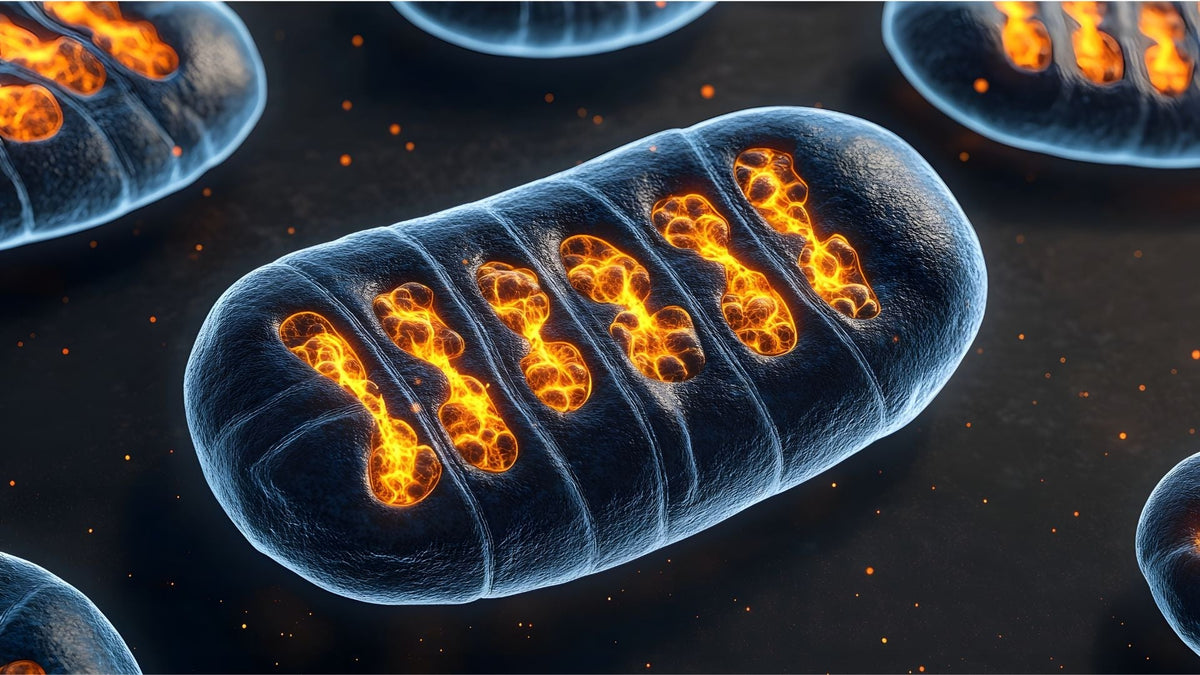
They are one of the most important cellular organelles, as they are considered the “power plants” of our body.
Their main function is to provide the chemical energy necessary for cellular biosynthesis through their ability to convert energy from nutrients and store it in phosphate bonds within ATP molecules. 99% of these ATP molecules are produced within the mitochondria.
In addition to energy generation, mitochondria participate in other mechanisms, such as cellular metabolism, calcium signaling, and cell death. All cells in the body, except red blood cells, have mitochondria inside them, although it is in muscle and nervous system cells where there are higher concentrations, precisely because they require more energy. However, the liver and kidneys, as well as the brain, require mitochondrial energy. This means that when mitochondrial dysfunction occurs, symptoms will appear in the muscles, the brain, and sometimes also in the kidneys or the liver.
Due to events of high energy demand, such as performing high-intensity exercise, the onset of pathologies, or the normal aging process, the natural ability of cells to produce energy can be reduced.
When mitochondria do not function properly or are defective, it is called mitochondrial dysfunction, which can translate into insufficient ATP production, so cells do not have enough energy. Unused oxygen and fuel molecules accumulate in the cells, causing damage.
Mitochondrial dysfunction can cause extreme fatigue, fibromyalgia, and other symptoms that typically afflict patients, especially those with heart failure.
Congestive heart failure (CHF) is a serious clinical heart syndrome that can be the result of several heart diseases that have led to a severe stage. Due to reduced ventricular pumping or filling function, cardiac output cannot meet metabolic needs; therefore, blood perfusion of tissues and organs is insufficient, and as a result, pulmonary congestion or systemic circulation congestion develops.
CHF is the end-stage event of heart disease progression and a leading cause of death in patients with various heart diseases.
D-ribose supplementation can efficiently target the myocardium and reduce the loss of ATP in cardiomyocytes attributed to ischemia in patients with coronary artery disease, as well as improve early diastolic filling and respiratory performance in patients with CHF.
These debilitating syndromes are often associated with a decline in cellular energy metabolism. Because D-ribose has been shown to increase cellular energy synthesis in cardiac and skeletal muscle, D-ribose supplementation could lead to improvements in energy, sleep, mental clarity, pain intensity, and well-being in people afflicted with these conditions.
Skeletal muscle ATP levels are drastically reduced during and after prolonged high-intensity exercise. Recovery of these low ATP levels can take days, which can affect performance in the days following. Untrained individuals often suffer the stress and consequences of acute and repeated episodes of exercise as they are unable to perform or recover enough to exercise in the days that follow. Conversely, trained individuals can recover more quickly thanks to their improved metabolism.
A specific study, The influence of D-ribose ingestion and fitness level on performance and recovery, conducted with endurance athletes, found that those who supplemented with D-ribose maintained higher power output and experienced a smaller decline in performance over a series of high-intensity sessions compared to a placebo group.
Research focused on exercise recovery has shown that D-ribose supplementation can facilitate faster restoration of ATP levels after high-intensity exercise, which could reduce recovery time and improve subsequent performance.
Important: ribose exists in two forms: L-ribose, the unstable synthetic form, and D-ribose, used in supplements to reduce fatigue and improve athletic performance.
D-ribose is a natural pentose present in all cells of the organism. It is fundamental for the synthesis of RNA and DNA, as well as for the production of ATP, the main cellular energy molecule; furthermore, it has been found to have functions related to immunology, cellular apoptosis, calcium storage, compound synthesis, redox state regulation, steroid synthesis, cellular signaling and communication, neuronal development and function, and heat production.
Without sufficient energy, cells cannot maintain their integrity or function. Research has proposed that D-ribose supplementation could support certain cellular processes in the context of mitochondrial dysfunction.
Currently, it has been proposed that various clinical conditions such as heart failure, fibromyalgia, and chronic fatigue syndrome could be caused to some degree by mitochondrial dysfunction. This is where its importance lies, making D-ribose a molecule of potential interest for improving cellular energy availability.
Preliminary studies have suggested that D-ribose supplementation could support the recovery of ATP levels during high-intensity exercise and the reduction of certain symptoms such as fatigue, muscle pain, or effort intolerance.
Nazira Docmac
Integrative, Orthomolecular, and Bioregulatory Nutritionist.


