
Prebiotic: Key Nutrients for the Microbiota and Holistic Health
|
|
Time to read 4 min

|
|
Time to read 4 min
The role of prebiotics in gut and brain health has gained increasing relevance in nutritional medicine. More than just simple fiber, prebiotics are the essential food for the gut microbiota, benefiting everything from digestion to mood. In this article, we will explore what they are, how they work, and why including them in your diet is one of the smartest decisions for your well-being.
Our health depends largely on the proper functioning of the millions of microorganisms that inhabit our entire body and are found in greater quantities in the large intestine, constituting the “gut microbiota.”
These probiotic microorganisms require nourishment to help our entire body perform its functions correctly and achieve the goal of keeping us healthy. It has been proven that there is a type of plant fiber that has been called “prebiotic.” Do not confuse this with the term “probiotics,” which refers to live microorganisms capable of benefiting organic function.
Since 2017, a prebiotic has been described as a "substrate selectively utilized by host microorganisms that confers a health benefit."
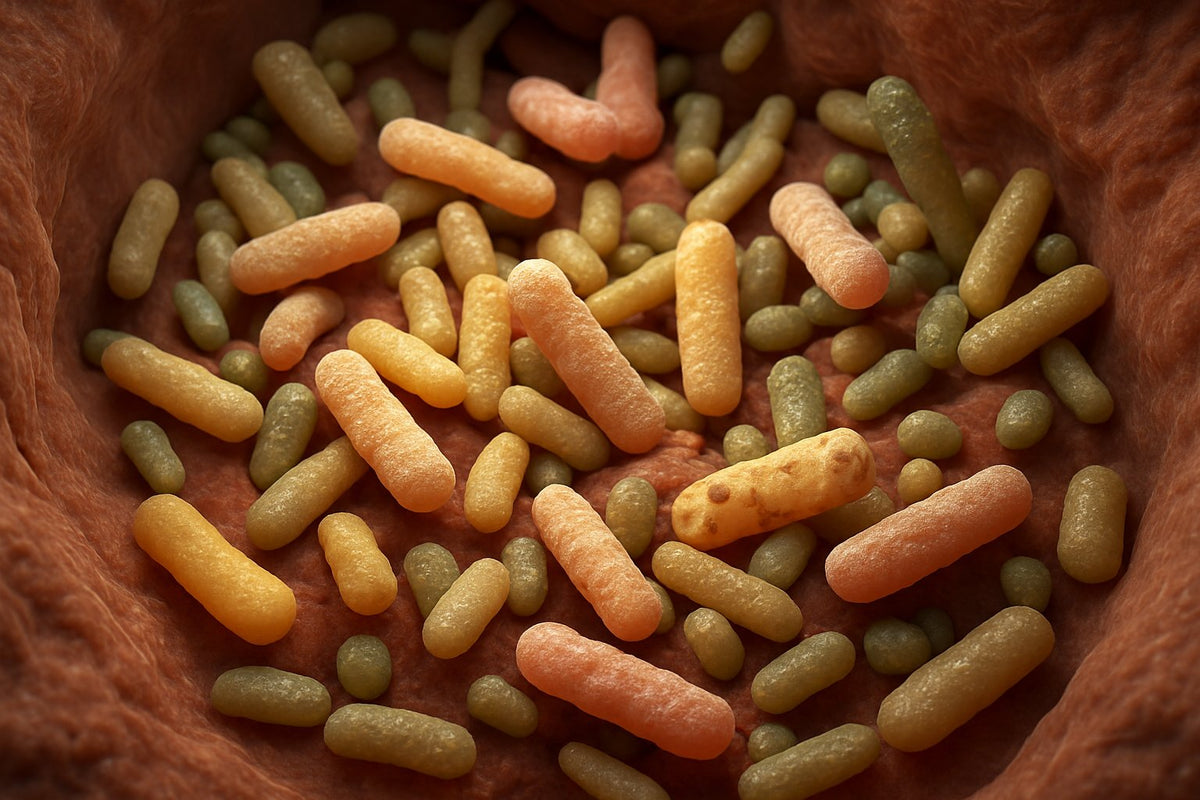
A prebiotic helps the specific and selective growth of microorganisms in the probiotic gut microbiota, which is made up of diverse strains or families of bacteria, firmicutes, and other microorganisms, providing multiple beneficial effects to the human body, including brain functions.
Prebiotics are carbohydrates that digestive enzymes cannot digest and therefore continue their journey to the colon, where they are digested by the microbiota, which uses them as a source of food for their growth and energy, producing, among other substances, short-chain fatty acids (SCFAs) such as butyric and propionic acid, which are of great importance for intestinal physiology and nutrition.
SCFAs provide the necessary energy for colonocytes (cells of the large intestine epithelium), possess anti-inflammatory properties in the intestinal epithelium, are anticancer, and help in cases of leaky gut and diverticulosis, being useful for glycemic control and the reduction of insulin resistance.
SCFAs are formed in the colon by the fermentation of foods rich in resistant starch or soluble fiber, which is why it is so important to include them in the diet. Resistant starch is considered one of the main prebiotic food sources for the production of butyric acid.
Study groups suggest that butyric acid is responsible for protecting neurons in neurodegenerative diseases, such as Parkinson's, and improving neuronal metabolism by providing energy to these cells. Butyrate, a postbiotic compound produced by the digestion of prebiotics by the microbiota, could play a protective role in various cognitive functions, such as memory or problem-solving.
Some foods with the highest capacity to produce butyric acid are legumes, whole grains, potatoes, and seeds.
The intake of highly processed foods, which are low in fiber and rich in sugars, decreases butyrate production levels in the large intestine. A healthy diet should consider a sufficient intake of prebiotics.
Only some fibers are scientifically proven as prebiotics, including chicory root fiber, inulin, fructooligosaccharides (FOS), and galactooligosaccharides (GOS).
We can find prebiotics in dietary supplements and in foods such as whole grains, bananas, leafy green vegetables, onions, garlic, artichokes, dandelion greens, Jerusalem artichokes, leeks, and onions.
Chicory root: contains 50% inulin, improves gastrointestinal absorption of minerals, reduces the risk of atherosclerosis, and increases satiety.
Mushrooms: rich in xylans, galactans, β- and α-glucans, and chitin (such as button mushrooms, shiitake). They stimulate the growth of the microbiota.
Garlic: contains inulin and FOS, promotes the growth of Lactobacillus acidophilus. It is also anti-inflammatory and antioxidant.
Asparagus: contains FOS and inulin, excellent for the gut microbiota.
Artichoke: high in inulin, minerals, vitamins, and phenolic compounds.
Oats: improves digestion, fights constipation, and supports weight loss. Contains oligofructose, inulin, oligosaccharides, and lactulose.
Fructooligosaccharides and galactooligosaccharides have been shown to reduce anxiety and depression in people who consumed ≥ 5 g/day.
Prebiotics increase bifidobacteria and lactobacilli in the gut microbiota, improve the absorption of calcium, iron, phosphorus, and magnesium. They increase the frequency and volume of bowel movements, regulate glycemia, and increase satiety. They also reduce the risk of developing colon cancer or diverticula, and lower cholesterol and triglyceride levels.
Although it would always be better to incorporate prebiotics through the diet, most people consume little fiber, and even less prebiotic fiber, so supplements are a good aid.
However, you must be sure to acquire those that contain fibers considered to be prebiotic, such as inulin, FOS, and GOS, in good quantity, so that the expected effect is achieved.
Associated with high-quality diets, prebiotics and probiotics can be very relevant to mood, reducing anxiety.
Diets rich in prebiotic fiber and omega-3 polyunsaturated fatty acids may be linked to a lower risk of developing symptoms of depression, anxiety, and stress.
Certain probiotics (psychobiotics) could improve mood, but more research is needed to identify them with certainty.
With proper prebiotic supplementation, it is possible to modulate the gut microbiome, favoring the immune system, which offers a promising strategy for maintaining the integrity of immune function, especially in the elderly.
Nelba Villgrán
Orthomolecular and Integrative Nutritionist, Minsal-certified naturopath.
Bibliography
1. C. Chenhuichen C., Cabello-Olmo M. Barajas M. Izquierdo M, Ramírez-Vélez R.
Zambom-Ferraresi F. et al. Impact of probiotics and prebiotics on the modulation of the main events of the aging process: a systematic review of randomized controlled trials.
Exp. Gerontol. 2022; 164111809https://doi.org/10.1016/j.exger.2022.111809
2. Nutr Neurosci. 2020 Mar;23(3):237-250. Andrew M. Taylor 1 , Hannah D. Holscher . doi: 10.1080/1028415X.2018.1493808. Epub 2018 Jul 9. PMID: 29985786. DOI: 10.1080/1028415X.2018.1493808
3. https://www.foodunfolded.com/es/articulo/que-son-los-prebioticos-alimentos-y-suplementos
4. https://www.alimente.elconfidencial.com/bienestar/2021-12-26/acido-butirico-proteccion-intestinal_2751640/


