
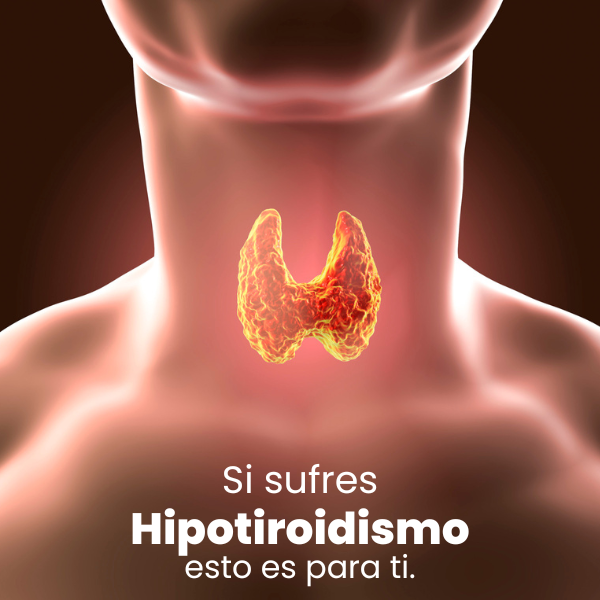
If you have hypothyroidism, this is for you.
|
|
Time to read 2 min

|
|
Time to read 2 min
The thyroid gland is butterfly-shaped and located in the front of the neck. Its function is vital to the body, as it controls metabolism. This process includes functions such as breathing, blood circulation, and regulation of body temperature. There is not a single cell in the body that is not a receptor for thyroid hormone.
The thyroid is stimulated by thyroid-stimulating hormone (TSH), released by the brain. Once stimulated, it produces two key hormones for metabolism:
Thyroxine (T4)
Triiodothyronine (T3)
These hormones regulate metabolism and balance the growth and functionality of other body systems.
T3 and T4 hormones influence heart rate, cholesterol levels, body weight, energy level, muscle strength, skin, menstrual regularity, memory, and temperature regulation. TSH is the hormone that regulates the amount of T4 and T3 that must be produced.
Some women with hypothyroidism also have polycystic ovaries, which can be a cause of infertility.
Essential nutrients for the proper functioning of the thyroid gland include:
Iodine
Tyrosine
Selenium
Zinc
Iron
Copper
Zinc is crucial for transporting T3 to cellular DNA. Selenium helps in the production of T3 for metabolic processes. Additionally, vitamins A, B2, B3, B6, B12, C, and E, the amino acid L-tyrosine, and omega-3 fatty acids are fundamental for thyroid function.
Without these nutrients, the thyroid cannot produce enough T4 hormone or convert it into T3 efficiently.
Excessive consumption of iodine (more than 500 mcg per day) can cause autoimmune thyroid diseases. In these cases, the immune system attacks the thyroid, which leads to hypothyroidism. Reducing the consumption of processed products with hidden salt helps prevent this condition.
Since 1976, Chile has implemented iodized salt to combat goiter. Initially, 100 mcg per gram of salt was added, but in 2000, it was reduced to 40 mcg per gram due to excessive intake. Currently, some experts propose reducing it to 24 mcg per gram.
When hormone levels are low, bodily processes slow down, causing:
Fatigue
Dry skin
Hair loss
Depression
Weight gain
Constipation
Cold intolerance
In pregnant women, hypothyroidism can affect the fetal neurodevelopment and even cause congenital cretinism.
Low thyroid function prevents proper absorption of vitamin B12, which can cause anemia and neurological problems. Additionally:
Without adequate levels of vitamin B6, iodine cannot be properly used to produce thyroid hormones.
Vitamin C deficiency can affect the thyroid capillaries.
Lack of iron can contribute to the gland's malfunction.
To confirm the presence of hypothyroidism, blood tests are performed to measure hormone levels.
Sources:
Nelba Villagrán
Integrative Nutritionist, Bioregulator, specialist in Orthomolecular Nutrition, Homotoxicology, and certified Naturopath.


