
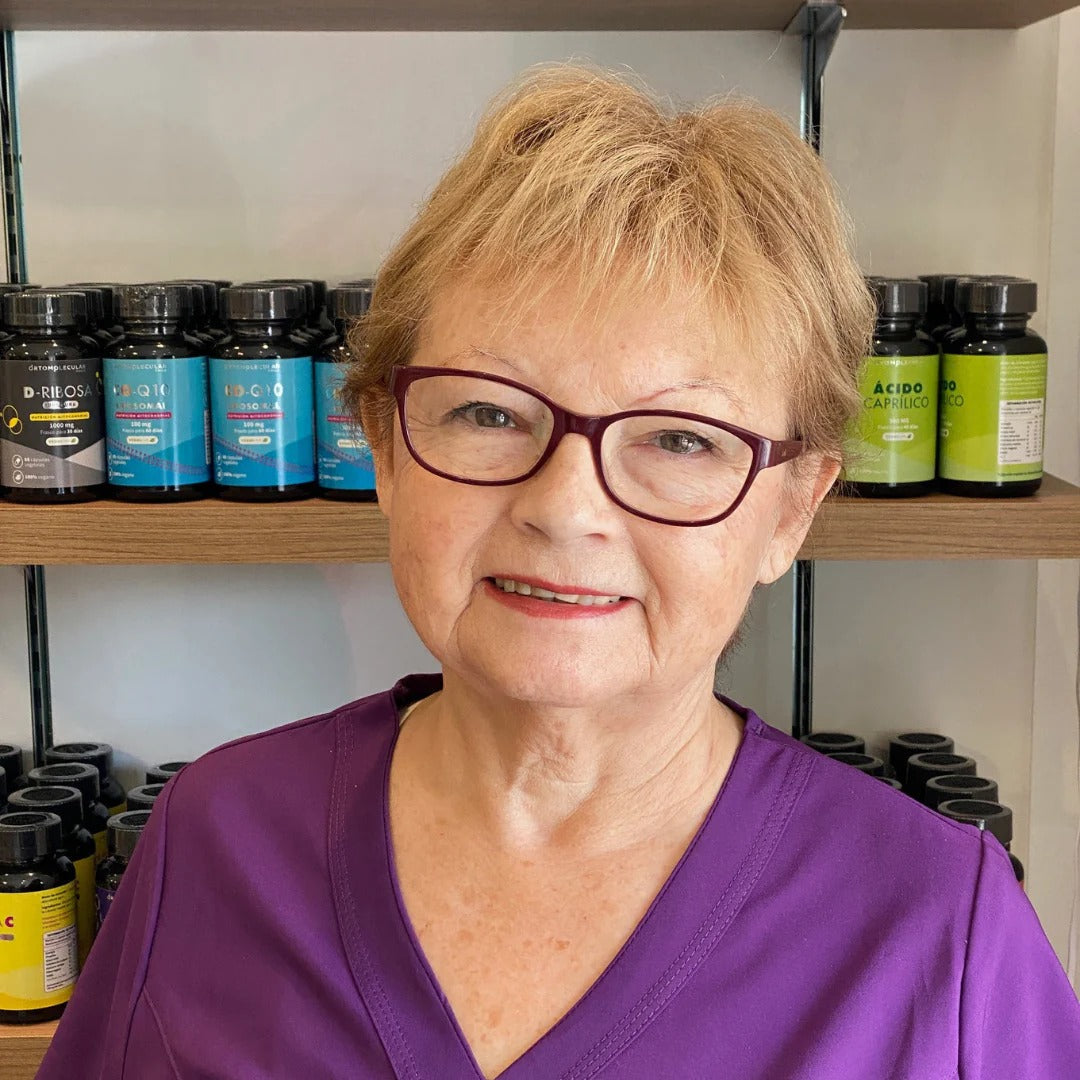
A health story: How nutrition transformed my life
|
|
Time to read 4 min

|
|
Time to read 4 min
I suffered from episcleritis, an autoimmune eye disease, for years without finding relief. After removing meat from my diet, the flare-ups disappeared completely. This led me to investigate the relationship between diet and health, promoting nutrition as a therapeutic tool. Today I know that food can transform our health.
"Today I know that food can transform our health"
Between 1992 and 1995, my life took an unexpected turn when I developed a painful eye condition that affected my daily life as a teacher in technical and university education institutions. The pain was so intense that it prevented me from opening my eyes, moving them in any direction, and even affected my skull.
After multiple diagnoses, a specialized ophthalmological institute concluded that I suffered from a rare autoimmune disease called episcleritis. At that time, the only available treatment consisted of eye drops and oral corticosteroids, which I used for more than a year. However, the flare-ups became more frequent, appearing unexpectedly even while I was teaching, which forced me to stop my activity.
Upon discovering that the prolonged use of corticosteroids was not advisable, I began to look for other options. My journey took me to the Bascom Palmer Eye Institute in Miami, where they informed me they were researching the disease and provided me with eye drops that did not contain corticosteroids. I returned to Chile with a note for my ophthalmologist, encouraging him to get in touch with them.
However, the eye drops soon ran out, and the flare-ups returned. It was then that, during one of my classes at INACAP Chesterton, I suffered a particularly painful flare-up. Some colleagues suggested I visit a naturopathic center, where I was treated by Dr. Riquelme. His advice was clear: I needed to incorporate phytotherapy and remove meat from my diet.
Although I did not follow the recommended phytotherapy, I did remove meat from my diet. The result was surprising: I never had another flare-up again. This sparked in me a deep interest in the relationship between nutrition and health, a topic that was not addressed in depth at the university.
I began to research and read key books on integrative medicine, such as Nutrition: The Third Medicine by Dr. Jean Seignalet, How to Eat by Dr. Andrew Weil, and several publications by Dr. Jorge Pamplona Roger. Additionally, I took courses on naturopathy with Dr. Pedro Silva, who was the Medical Director of the Villa de Vida Natural Lezaeta Acharán at that time.
At that time, stating that it was possible to live without meat was considered scandalous in the field of nutrition. There was a belief that only animal-based proteins were complete and that eliminating meat was detrimental to health.
The idea that food could have a therapeutic effect was ridiculed in the academic and scientific spheres. There was no talk of phytochemicals or nutraceuticals, concepts that are fundamental in nutritional science today.
Thanks to these discoveries, I began to participate in talks and seminars aimed at nutritionists and health students, both in Chile and in other countries, with the goal of sharing my experience and knowledge about supplementation, health, and nutrition.
During this stage, I also observed that many people with asthma or frequent respiratory diseases improved significantly by removing dairy products from their diet. Despite strong opposition from the scientific community, I verified it time and time again with my patients.
Later, in my role as a collective catering nutritionist, I proposed incorporating hot vegetarian dishes and a self-service bar with eight varieties of salads with olive oil in a company cafeteria that served 3,000 bank employees. To do this, I organized a vegetarian cooking course with the company's chefs, who enthusiastically joined the initiative. The result was a success, proving that many people opted for healthy options even if they were not vegetarian.
In my constant search for knowledge, I discovered orthomolecular nutrition, which is based on the use of nutrients in optimal doses to prevent and treat diseases. With advances in the microbiota, persistent inflammation, omega-3 fatty acids, and vitamin D3, it has been demonstrated that food and nutrition are much more than a simple source of energy: they are the foundation of health and well-being.
Currently, we know that supplementation is key to compensating for nutritional deficits resulting from impoverished diets or diets contaminated with xenobiotics, substances that affect how our bodies function.
Today, after 20 years of experience, I am certain that nutrition is the foundation of any successful medicine. Although I am no longer a vegetarian, I know that it is possible to lead a healthy life without meat, always adapting the diet to each person's individual needs.
It is essential for nutritionists to empower themselves with knowledge about supplementation, health, and orthomolecular nutrition, understanding that dietary supplements can be essential allies in maintaining a strong and balanced organism.
More and more research confirms what I experienced in my own life: nutrition has a transformative power and can be our best tool for health.
Nelba Villagrán
Orthomolecular Nutritionist, Bioregulatory Medicine, Specialist in Anti-Inflammatory Nutrition, Epigenetics and Nutrigenomics, Naturopath. Vegetarian diet, Medical Botany, Natural Medicine, Phytotherapy.


