
Lipedema: A condition that goes beyond the stigma of weight gain
|
|
Time to read 7 min

|
|
Time to read 7 min
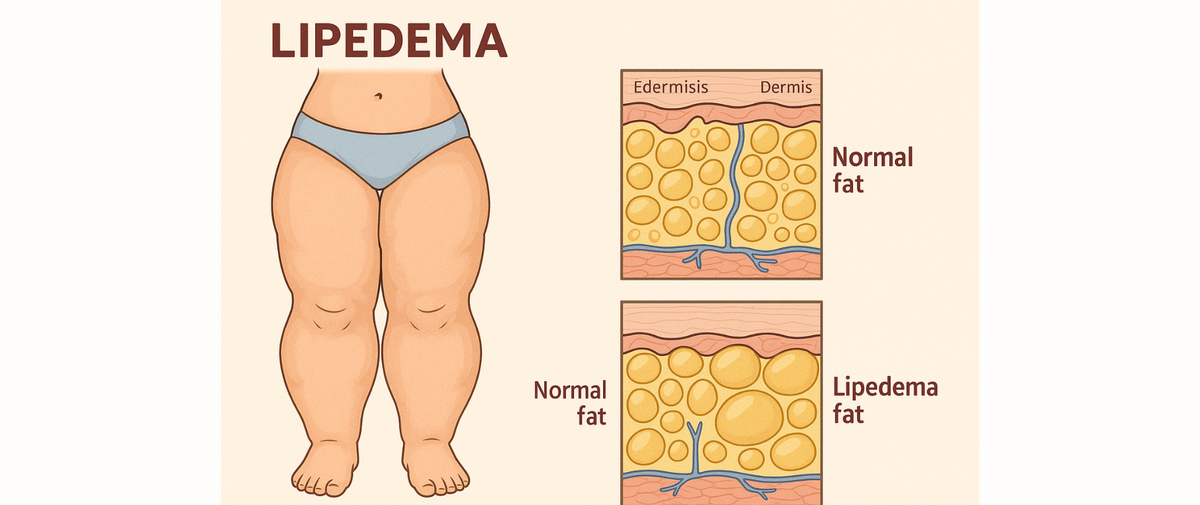
Lipedema is a chronic and underdiagnosed disease that primarily affects women, characterized by the symmetrical and painful accumulation of fat in the legs, buttocks, thighs, and, in some cases, arms. Although it is often confused with obesity, it presents specific causes, symptoms, and treatments that require a comprehensive approach including nutrition, exercise, supplementation, and physical therapy to improve quality of life.
It is a chronic disease characterized by the abnormal accumulation of adipose tissue and has a 10% prevalence in women.
Unfortunately, it is often undiagnosed, as lipedema can be mistakenly confused with obesity or even lymphedema, which is the accumulation of lymphatic fluid in the body.
However, although lipedema and obesity can coexist in one person, the difference is that lipedema presents as a symmetrical enhancement of adipose tissue seen mainly in the legs, lower abdomen, thighs, buttocks, and calves. In the upper body, this abnormal fat accumulation can also be observed in the arms. But unlike obesity, it leaves the trunk, hands, and feet intact. Another important characteristic to distinguish between them is that in lipedema, the fat deposit is painful.
Although some cases have been reported in men, it is more frequent for it to develop in women during puberty or other times when hormonal changes related to estrogen occur, or changes in body shape or weight, such as during menopause, pregnancy, or childbirth.
Therefore, genetic predisposition and lifestyle, along with lymphatic, hormonal, or microvascular disorders, could partly explain the onset of this pathology.
It is attributed that the pain is a consequence of the dysregulation that affects the sensory nerve fibers located in the specific area where adipose tissue accumulates disproportionately. It is believed that it is the increase in pro-inflammatory markers in the area that affects the nerve endings.
Although we have already explained that lipedema and obesity are not the same, they can both go hand in hand.
The pathological subcutaneous fat of lipedema is resistant to diet, so it is essential that patients receive proper nutritional education to prevent being overweight, as they may have a higher risk of developing obesity. This can be explained on one hand by the difficulty of maintaining an active lifestyle due to pain, and on the other hand, by the increased inflammation caused by the increase in adipose tissue.
It is important to mention that BMI or even body composition evaluations where the percentage of lean mass and fat mass are assessed are not conclusive for classifying overweight or obesity in patients with lipedema, as the marked increase in adipose tissue in the extremities often produces false high values. A more precise evaluation of the disproportionate fat distribution is achieved by combining this with the waist-to-height ratio.
Because Lipedema is often confused with obesity, a large portion of women with this pathology are given incorrect nutritional treatments, sometimes even being prescribed exaggerated diets, which obviously do not achieve results, leading to guilt and dissatisfaction in the women themselves, in their family environment, and socially as well.
Studies show that women with lipedema have significantly greater psychological, emotional, and social damage compared to other women.
While there is still no consensus on which diet is most appropriate for the treatment of lipedema, understanding that pro- and anti-inflammatory factors can influence lipedema symptoms, several authors recommend an Anti-inflammatory diet for treatment.
Parallel to this recommendation, studies have been conducted with a Modified Mediterranean Ketogenic diet, that is, a combination of both, and although the number of people who have undergone this intervention has been low, positive results have been seen in terms of weight loss and fat percentage.
The Modified Mediterranean Ketogenic diet focuses on the consumption of monounsaturated and polyunsaturated fats, highlighting, for example, the consumption of olive oil, nuts, avocado, and omega-3 fatty acids. It also prioritizes the consumption of proteins from animal and vegetable sources, the consumption of antioxidants from fresh vegetables, and the use of herbs and spices to reduce the amount of added salt.
Ultra-processed foods, preserves and canned goods, frozen pre-cooked meals, sausages, simple carbohydrates (bleached, without fiber), sugary foods, alcoholic beverages, and liquids with sugar are excluded from this diet.
The conclusions of the studies also suggest that the diet be low in calories and accompanied by adequate nutritional supplements and exercise to improve adherence to the diet and control weight gain in lipedema.
Nutritional supplements that help increase metabolism and boost lean mass—that is, fat-free mass—could be useful allies in the treatment of lipedema.
Because reducing adipose tissue and increasing lean mass could reduce pain and improve the mobility of patients with lipedema.
Caffeine: We naturally find it mainly in coffee, tea, and cocoa; among its benefits, it can act as an energy and sports performance booster. Caffeine has significant scientific evidence, so we can say that it has the ability to increase the release of stored fat and the rate of its oxidation.
Green tea: Among its antioxidants, catechins stand out, known among other benefits for their effect on weight loss in humans. Catechins stimulate fat oxidation and energy expenditure, decreasing weight gain induced by dietary fat.
Omega 3: This fatty acid has a potent anti-inflammatory role. And as we already know, obesity is a chronic inflammatory disease, which can also lead to the development of comorbidities such as type 2 diabetes, CVD, fatty liver, among others.
Excess calories are stored as fat in adipose tissue, which leads to hyperplasia, hypertrophy, and remodeling of this tissue; as homeostasis is altered and the environment of the adipose tissue changes, it shifts from an anti-inflammatory and insulin-sensitive state to a pro-inflammatory, hypoxic, and insulin-resistant state.
This is where omega-3 polyunsaturated fatty acids enter, as they help resolve inflammation through the generation of anti-inflammatory eicosanoids and specialized pro-resolving mediators, including resolvins, protectins, and maresins.
In addition to their potent anti-inflammatory and adipogenic effects on adipose tissue, omega-3s could contribute to the reduction of inflammatory bowel diseases, autoimmune diseases, among other related disorders.
Proteins: It has been studied that the use of protein powder supplements can help with muscle development, increased energy, increased strength, and appetite control. They also help improve exercise endurance and are helpful in weight loss.
Always remember to choose clean proteins, without harmful sweeteners or additives, like those you can review on our website:
Vitamin D3: Maintaining adequate levels of vitamin D can favor the decrease of inflammatory cellular markers and processes. Furthermore, by participating in calcium metabolism, its role in bone and muscle health is vital for people with lipedema, as they often face muscle weakness and mobility problems.
Magnesium: This mineral can help with muscle and osteoarticular health; its usefulness in patients with lipedema is related to the relief of cramps, which often affect the lower extremities; additionally, magnesium can contribute to circulation in the affected tissues.
The diagnosis of lipedema remains a challenge for healthcare professionals, due to a lack of understanding of the symptoms and their presentation, as well as the current lack of specific measurement instruments for diagnosis.
Nutrition and weight control influence the preservation or recovery of mobility and functionality, as well as the prevention of disease progression. Therefore, depending on each patient's situation, treatment should include maintaining a healthy body composition and reducing pain and symptoms.
Good lifestyle habits such as exercise, nutrition, and the personalized use of supplements can contribute to better clinical management and a better quality of life for patients.
References:
Di Renzo, L., Gualtieri, P., Zomparelli, S., De Santis, G. L., Seraceno, S., Zuena, C., Frank, G., Cianci, R., Centofanti, D., & De Lorenzo, A. (2023). Modified Mediterranean-Ketogenic Diet and Carboxytherapy as Personalized Therapeutic Strategies in Lipedema: A Pilot Study. Nutrients, 15(16), 3654. https://doi.org/10.3390/nu15163654
Jerab, D., Blangero, F., da Costa, P. C. T., de Brito Alves, J. L., Kefi, R., Jamoussi, H., Morio, B., & Eljaafari, A. (2025). Beneficial Effects of Omega-3 Fatty Acids on Obesity and Related Metabolic and Chronic Inflammatory Diseases. Nutrients, 17(7), 1253. https://doi.org/10.3390/nu17071253
Faerber, G., Cornely, M., Daubert, C., Erbacher, G., Fink, J., Hirsch, T., Mendoza, E., Miller, A., Rabe, E., Rapprich, S., Reich-Schupke, S., Stücker, M., & Brenner, E. (2024). S2k guideline lipedema. Journal der Deutschen Dermatologischen Gesellschaft = Journal of the German Society of Dermatology : JDDG, 22(9), 1303–1315. https://doi.org/10.1111/ddg.15513
Verde, L., Camajani, E., Annunziata, G., Sojat, A., Marina, L. V., Colao, A., Caprio, M., Muscogiuri, G., & Barrea, L. (2023). Ketogenic Diet: A Nutritional Therapeutic Tool for Lipedema?. Current obesity reports, 12(4), 529–543. https://doi.org/10.1007/s13679-023-00536-x
Bonetti, G., Herbst, K. L., Dhuli, K., Kiani, A. K., Michelini, S., Michelini, S., Ceccarini, M. R., Michelini, S., Ricci, M., Cestari, M., Codini, M., Beccari, T., Bellinato, F., Gisondi, P., & Bertelli, M. (2022). Dietary supplements for lipedema. Journal of preventive medicine and hygiene, 63(2 Suppl 3), E169–E173. https://doi.org/10.15167/2421-4248/jpmh2022.63.2S3.2758
Kruppa, P., Georgiou, I., Biermann, N., Prantl, L., Klein-Weigel, P., & Ghods, M. (2020). Lipedema-Pathogenesis, Diagnosis, and Treatment Options. Deutsches Arzteblatt international, 117(22-23), 396–403. https://doi.org/10.3238/arztebl.2020.0396
Nazira Docmac
Integrative, Orthomolecular and Bioregulatory Nutritionist.


